

 Book an Appointment


You may still need professional cleaning even if you brush twice a day. Brushing and cleaning between your teeth help remove soft plaque, but they cannot remove deposits that have hardened into tartar. A dental assessment helps establish whether there are deposits to remove, how healthy your gums are, and what care is appropriate. Good brushing alone does not tell you whether a scale and polish is needed. NIDCR
For current Teeth Q fees, subsidy information and appointments, see our scaling and polishing service page.
What do scaling and polishing actually remove?
Plaque is a bacterial film that collects on teeth. Tartar, also called calculus, is hardened plaque that requires professional removal.
Scaling removes deposits with dental instruments. Polishing can remove some surface staining and leave cleaned surfaces feeling smoother. Polishing does not bleach teeth or guarantee a whiter shade. Alexandra Hospital
Professional cleaning supports home care; it does not replace it. Ask your dentist to show you any areas you are missing and how to clean them effectively. Dorset County Hospital

How does the dentist decide whether I need it?
The assessment can include looking for inflammation, checking gum pockets and reviewing your medical history and risk factors. X-rays may be appropriate to assess bone levels. Treatment depends on the findings, rather than the appearance of the front teeth alone. NIDCR
Tell the dental team if your gums bleed, feel sore, or seem to be receding. Persistent bad breath or a tooth becoming loose also warrants assessment. These signs should not be treated simply as a request for cosmetic polishing. NHS
What happens during a scale and polish?
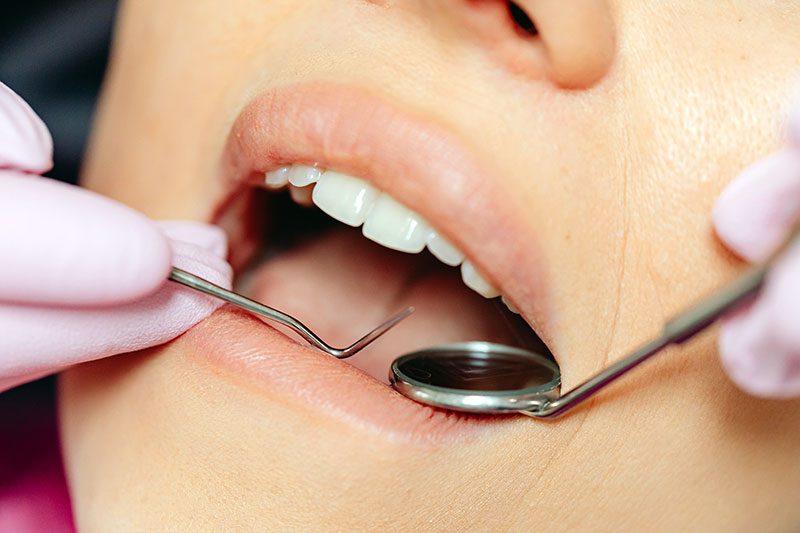
After assessing your mouth and discussing the recommended care, the clinician may use an ultrasonic instrument, hand instruments, or both to remove deposits. You may notice vibration, water spray or scraping sensations. Polishing may follow to address suitable surface stains. Alexandra Hospital
The visit is also an opportunity to learn a brushing or interdental-cleaning technique that fits your teeth. Ask which parts of the proposed appointment are necessary, what they involve and what they cost before treatment begins. Additional care such as fluoride application should be based on your needs. Dorset County Hospital
Is scaling and polishing painful?
Some people notice little discomfort; others experience sensitivity, particularly around sensitive teeth or inflamed gums. Tell the clinician if you are uncomfortable or anxious. The team can discuss comfort measures and whether anaesthetic is appropriate for the treatment proposed.
Temporary tenderness or sensitivity can occur afterwards. Follow the advice given for your mouth, and contact the clinic if symptoms are worsening or concerning. Your experience may differ from someone else’s.
Do I need it every six months?
There is no single cleaning schedule that suits everyone. Ask your dentist what interval is appropriate for your gum health and why.
A Cochrane review of adults without severe periodontitis who regularly attended dental care found that scheduled six- or twelve-monthly scale-and-polish treatment made little or no difference to several gum-health measures compared with no scheduled cleaning over two to three years. Scheduled treatment reduced tartar slightly. This finding does not mean people with deposits or gum disease should avoid assessment or treatment. Cochrane review
A check-up interval and a cleaning schedule are also different decisions. Guidance on risk-based dental reviews should not be interpreted as a fixed timetable for scaling. NHS England
Is a scale and polish the same as deeper gum treatment?
No. Routine cleaning and treatment for established periodontal disease can differ in scope. More serious gum disease may require deeper cleaning beneath the gums, further treatment or specialist care. A routine scale and polish should not be presented as a complete solution for every gum problem. NHS
If deeper treatment is recommended, ask what the examination found, which areas need treatment and how progress will be reviewed. You can also read our guide to bleeding gums.
What should I do between visits?
Brush with fluoride toothpaste twice a day and clean between your teeth daily using an appropriate method. Ask for a demonstration if you are unsure how to use floss or interdental brushes. Keep attending the reviews recommended for you. NHS
Avoid trying to scrape tartar off yourself. Arrange professional assessment and removal instead. NIDCR
What should I ask before booking?
Useful questions include:
- Do I need a routine examination and cleaning, or an assessment of bleeding or sore gums?
- What does the quoted fee include?
- Will any additional treatment be discussed with me first?
- What should I tell the team about sensitivity, medicines or previous dental experiences?
View Teeth Q’s scaling and polishing information for current fees and booking options. If you are unsure what appointment you need, contact your preferred clinic and describe your concern.
This guide provides general information and does not replace an individual dental assessment.