Does every wisdom tooth need removal?
No. A wisdom tooth that is not causing disease or other concerns may be monitored at routine reviews.

Clear explanations, appropriate imaging and aftercare for wisdom tooth concerns—from assessment and monitoring to extraction or specialist surgery when clinically indicated.
Clinically reviewed by Dr Desmond Goh. Written by the Teeth Q Editorial Team. Clinical review completed: 5 October 2026. Fees shown are current at the date of review and are confirmed at your assessment.
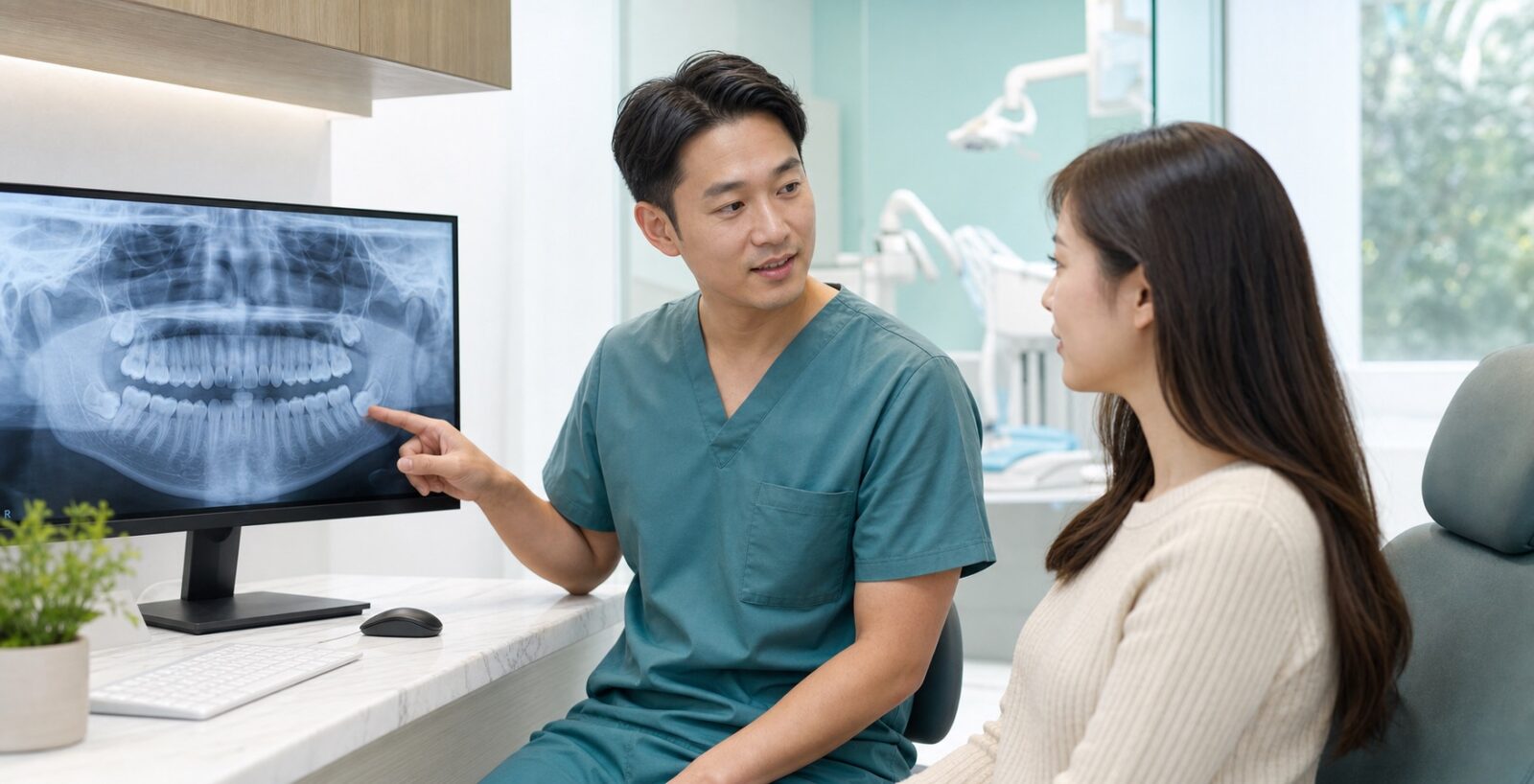
A clinical examination and suitable X-rays are needed before recommending whether a wisdom tooth should be monitored, extracted or surgically removed.
No. A wisdom tooth that is not causing disease or other concerns may be monitored at routine reviews.
The approach depends on tooth position, access, surrounding structures and clinical complexity.
Initial recovery commonly takes several days to about a week, but discomfort and swelling vary by case.
Surgical removal of an impacted tooth is MediSave-claimable within the CPF limit for its complexity category; a simple extraction is not. See fees and MediSave.
Wisdom teeth can be fully erupted, partly erupted or impacted beneath the gum or against another tooth. Assessment may be useful if you experience:
The most appropriate pathway is determined after examination and imaging—not solely by whether the tooth is described as impacted.
If there is no active disease or another clinical reason for removal, the tooth may be monitored during routine dental examinations.
A fully erupted and accessible wisdom tooth may sometimes be removed with a straightforward extraction under local anaesthesia.
An impacted or more complex tooth may require a surgical approach. Specialist assessment can be arranged when appropriate.
The details vary by tooth position, health and complexity, but the typical pathway includes:
Your concern, medical history and X-rays are reviewed to understand the tooth and surrounding structures.
Your clinician explains suitable options, relevant risks, expected recovery, fees and MediSave eligibility where applicable.
Local anaesthesia is commonly used. The procedure and any additional anaesthesia options depend on the individual plan.
You receive personalised post-treatment instructions and are advised when a review or stitch removal is needed.
Fees depend on the assessment, imaging required, type of removal, complexity and anaesthesia pathway. The clinical team will explain the recommended treatment and relevant charges before proceeding.
Worked example: surgical removal of one impacted wisdom tooth by a general dental surgeon at Hougang Green, with a procedure fee of $1,420 before GST ($1,547.80 with 9% GST). The procedure is classified under MediSave Table 2C, which allows up to $1,950 for the visit: up to $1,120 for the surgical procedure plus up to $830 for day-surgery charges. The full $1,547.80 can be claimed from MediSave if your balance allows, so nothing is paid in cash for the surgery. The $1,420 is a guide for a straightforward case: your fee may be higher or lower depending on the complexity of your case, which can also change the MediSave category and limit, so a more complex case may leave a balance to pay in cash. Consultation and the panoramic X-ray are charged separately, and CHAS can subsidise them for eligible cardholders. Your clinic confirms the category and amounts on your estimate.
Fees as per the Teeth Q fee schedule effective 5 May 2025. Full breakdown, government reference figures and CHAS caps: wisdom tooth extraction cost guide.
Key factors can include whether the tooth is erupted or impacted, its position, proximity to nearby structures, surgical complexity and whether specialist care is recommended.
The fee ranges are shown below; your clinic confirms which range applies after the X-ray.
Fees, MediSave and CHAS explained: Wisdom tooth extraction cost guide · CHAS dental subsidies and MediSave guide · Payment support: what to bring and ask
MediSave may be used for eligible surgical removal of a wisdom tooth performed at a participating clinic. Non-surgical dental extraction is generally not MediSave-claimable.
The available withdrawal amount depends on the classified procedure and prevailing rules. The clinic team can assist with the claim process after confirming eligibility.
Read current CPF Board guidance →Teeth Q works with accredited oral and maxillofacial surgeons for specialist assessment and management of appropriate cases. Dr Bertrand Chew consults at Hougang Green, while Dr Albert Lee consults at Hougang RiverCourt. Appointment availability varies.
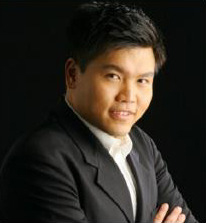
BDS (Singapore), FRACDS, MDS (Oral & Maxillofacial Surgery), FAMS.
An accredited specialist with clinical interests including wisdom tooth removal, dental implants and bone grafting.
Specialist clinic: Hougang Green
View Dr Bertrand Chew’s profile →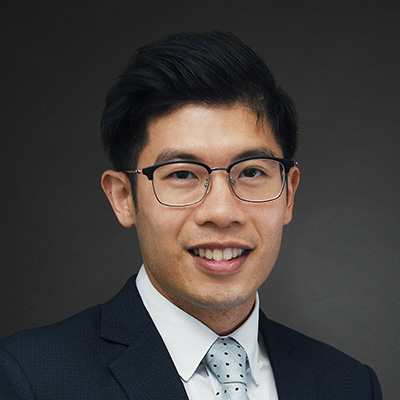
BDS (Singapore), MDS (Oral & Maxillofacial Surgery).
An accredited specialist with clinical interests including wisdom teeth surgery and dental implantology.
Specialist clinic: Hougang RiverCourt
View Dr Albert Lee’s profile →Start with a general dental assessment at any Teeth Q clinic, or book the dedicated oral-surgery specialist pathway at the available specialist locations.
A dentist can assess your symptoms, arrange appropriate imaging and discuss whether monitoring, extraction or specialist referral may be suitable.
Book a general assessmentBook this pathway when you have been advised to see an oral and maxillofacial surgeon, or want a specialist assessment for a potentially complex case.
Book specialist care Explore oral & maxillofacial surgery →Your instructions will be personalised to the procedure. Some swelling, tenderness, bruising, jaw stiffness or difficulty chewing may occur and should generally improve with time.
Follow the instructions for bleeding control, food, medication and oral hygiene. Avoid disturbing the wound or blood clot.
Choose suitable soft foods and avoid smoking, alcohol, strenuous activity and anything else your clinician advises against.
Attend any recommended review and contact the clinic if symptoms are not following the expected recovery pattern.
These answers provide general information. Your clinician’s advice takes priority because treatment and recovery differ between patients.
No. If a wisdom tooth is not causing disease or another clinical concern, monitoring may be reasonable. Removal may be discussed when the expected benefit outweighs the individual risks.
A fully erupted and accessible tooth may sometimes be removed with a simple extraction. An impacted or less accessible tooth may require a surgical approach involving the gum or surrounding bone.
Local anaesthesia is commonly used to numb the treatment area. You may feel pressure or movement, while post-treatment discomfort varies. Your clinician will discuss pain management and what to expect.
Sedation suitability depends on factors including your medical history, anxiety, treatment complexity and the planned care setting. Discuss the available options during assessment.
Procedure time varies considerably with the number and position of the teeth and the surgical complexity. Your clinician can provide a case-specific estimate after reviewing your examination and imaging.
Initial recovery commonly takes several days to about a week, although swelling, discomfort and the time needed away from normal activities vary. More complex surgery may require longer.
Stitches are often used after surgical removal but may not be needed for a simple extraction. Your clinician will explain whether they are dissolvable or require removal.
The published fees range from $180–$200 for a simple extraction and $650–$1,950 for surgical removal with a general dental surgeon, or $200–$300 and $1,250–$2,250 respectively with an oral and maxillofacial surgeon. Consultation and imaging are separate, and 9% GST applies at four of our six clinics. The fee for your tooth is confirmed after the X-ray.
Surgical removal of an impacted wisdom tooth is MediSave-claimable at Teeth Q; a simple extraction of an erupted tooth is not. The claim combines a surgical limit for the complexity category assigned at assessment with up to $830 a day for day-surgery charges. For a straightforward surgical removal (MediSave Table 2C) that is up to $1,950 for the visit. The clinic files the claim on the day; you pay any balance above the limit or your account balance, and a family member’s MediSave can be used with their authorisation.
Page information updated 5 October 2026. Clinically reviewed by Dr Desmond Goh. General information only; it does not replace an individual clinical assessment.
Arrange an assessment so the team can examine the area, review suitable imaging and explain the reasonable care options for your situation.