

 Book an Appointment


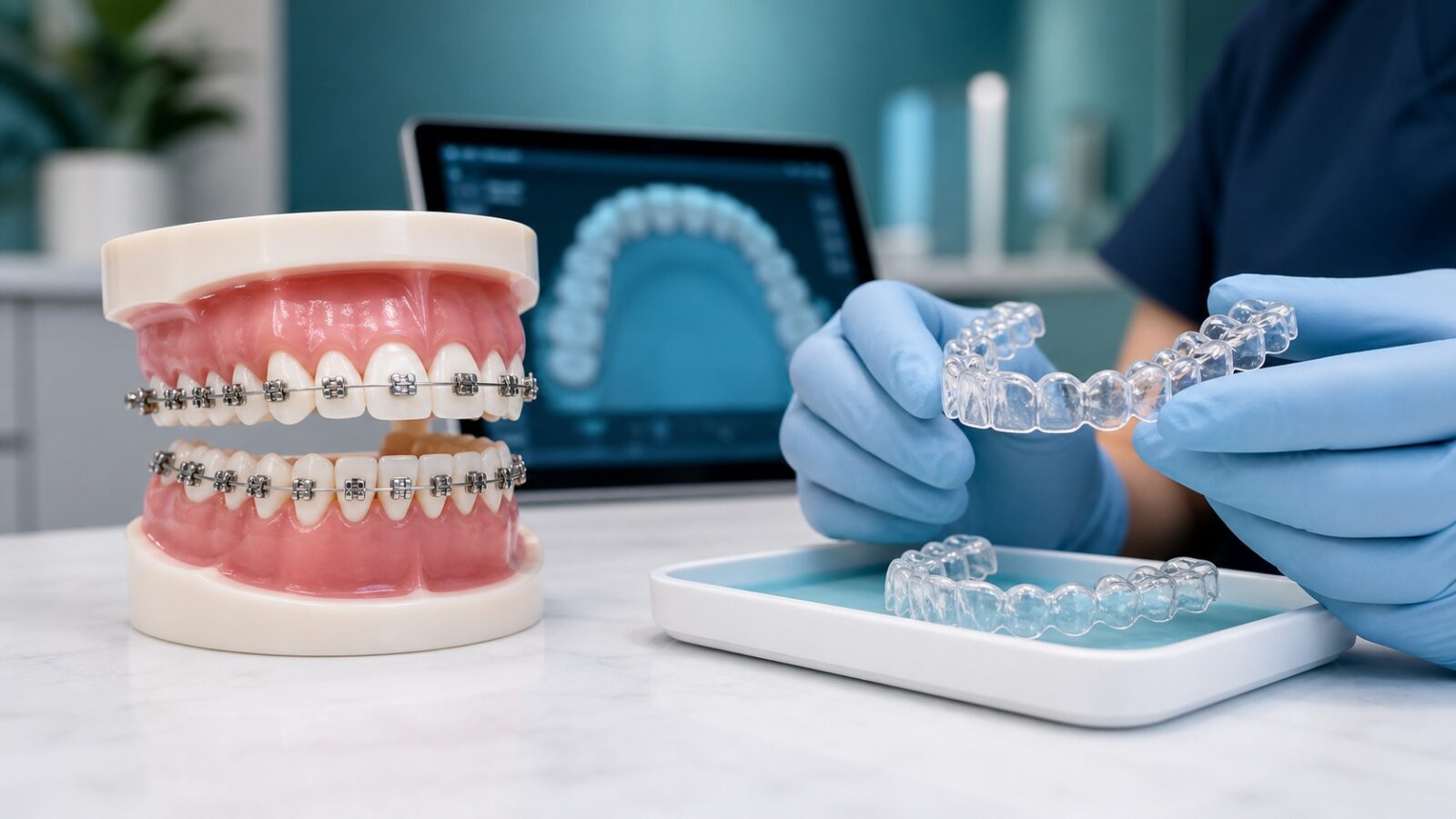
Both Invisalign and fixed braces can straighten teeth. Neither is the best choice for everyone: your diagnosis, treatment goals and daily routine determine which options are suitable. Invisalign uses removable clear trays; fixed braces stay attached to your teeth. American Association of Orthodontists
If you are comparing the two in Singapore, start with three questions: can both treat your problem, can you manage the daily care, and what does each proposed treatment fee include?
Invisalign vs braces: the practical differences
| Question | Fixed braces | Invisalign / clear aligners |
|---|---|---|
| Can I remove them? | No; brackets and wires remain attached. | Yes, for eating and cleaning. |
| What is the daily commitment? | Clean carefully around the appliance and avoid foods that could damage it. | Wear the trays as prescribed, usually around 22 hours daily; clean your teeth and trays. |
| How noticeable are they? | Metal brackets are visible; ceramic brackets are less conspicuous. | Clear trays are discreet, although tooth-coloured attachments may be noticeable. |
| Could either suit my teeth? | Assessment is needed. | Assessment is needed; some cases require additional techniques. |
| Will I need retainers afterwards? | Yes. | Yes. |
This table summarises general differences, not an individual treatment recommendation. AAO comparison, British Orthodontic Society
Does Invisalign work as well as braces?
Clear aligners can treat many alignment problems, but suitability depends on the movements required. Severe crowding, extractions, complex movements or differences in jaw size or position may require additional techniques, including fixed appliances. An orthodontic assessment is needed before choosing. British Orthodontic Society
Ask your clinician: “Are both options suitable for the same treatment goal in my case, and what are the limitations of each?”
How do fixed braces work?
Fixed braces use brackets bonded to the teeth and an archwire that connects them. The orthodontist adjusts or changes components during treatment so that controlled forces guide the teeth towards their planned positions. Metal braces are the most familiar form, while ceramic brackets use a tooth-coloured or translucent material to make the appliance less noticeable.
Because braces remain attached, they work continuously without depending on the patient remembering to put them back in. This can be useful for patients who prefer a fixed system or whose treatment requires movements that the clinician expects to control more predictably with brackets and wires.
Braces still require active patient participation. Good brushing, cleaning between the teeth, attending appointments and following advice about foods are important. Broken brackets and bent wires can interrupt progress and may require an additional visit.
How does Invisalign treatment work?
Invisalign is a brand of clear aligner treatment. A digital scan and clinical records are used to plan a sequence of close-fitting plastic trays. Each aligner is designed to move the teeth a small step towards the intended position before the patient progresses to the next tray as directed.
Aligners are removable, but that convenience comes with responsibility. They generally need to be worn for most of the day and night—often around 20 to 22 hours daily, depending on the treating clinician’s instructions. Regularly leaving them out for longer than advised can slow progress or affect how well the next tray fits.
Clear aligners are not necessarily completely invisible. Tooth-coloured attachments may be bonded to selected teeth to help the trays grip and deliver particular movements. Elastics or other auxiliary components may also be recommended.
Which option is suitable for more complex treatment?
There is no reliable rule that all straightforward cases should use aligners or that all complex cases must use braces. Clear aligner systems have developed considerably, and clinicians can sometimes use attachments, elastics or additional techniques to manage a wider range of movements.
However, treatment involving severe crowding, tooth extractions, complex rotations, significant bite correction or jaw discrepancies may require additional planning. For some patients, fixed braces may provide more predictable control. For others, clear aligners or a combination of approaches may still be reasonable.
The decision should be based on a full assessment of the teeth, gums, bite, jaw relationship and available space—not on photographs or a preference for a particular appliance alone.
Which is less noticeable?
Clear aligners are usually the more discreet option because the trays are transparent. They may appeal to adults, customer-facing professionals, students or anyone who feels self-conscious about visible appliances.
Metal braces are more obvious, although some patients enjoy choosing coloured elastics. Ceramic braces can reduce the visual contrast, but they are still fixed appliances and their suitability, care requirements and fees may differ from metal braces.
Appearance is only one consideration. A less visible appliance is not automatically the better clinical choice, and a treatment that is suitable on paper may not work well if the required wear routine is unrealistic for the patient.
Are “invisible braces”, ceramic braces and Invisalign the same?
The terms can be confusing. Ceramic braces use tooth-coloured or clear brackets but remain fixed to the teeth. Invisalign is a brand of removable clear aligners. When discussing a less noticeable option, ask whether the proposed appliance uses fixed brackets or removable trays. AAO: Ceramic braces
Eating, drinking and social routines
With fixed braces
Patients normally continue eating with their braces in place. Hard, sticky or very chewy foods can damage brackets and wires, so food may need to be cut into smaller pieces and certain items avoided. After meals, food can collect around the appliance and should be cleaned away carefully.
With clear aligners
Aligners are removed for meals and for drinks other than plain water unless the treating clinician advises otherwise. This reduces food restrictions, but the trays must be stored safely and replaced after eating and cleaning the teeth. Frequent snacking can make the wear schedule more difficult to maintain.
Patients should not wrap aligners in tissue during meals, as they can be accidentally discarded. A ventilated case is a safer habit.
Cleaning teeth with braces or aligners
Orthodontic treatment is normally started only when the teeth and gums are sufficiently healthy. Plaque left around brackets or under poorly cleaned aligners can contribute to tooth decay, gum inflammation and permanent white marks on the enamel.
Fixed braces require careful brushing around every bracket and along the gumline. Interdental brushes, floss threaders or other aids may be recommended. With aligners, patients can remove the trays to brush and floss normally, but must also clean the aligners as instructed and avoid replacing them over teeth that have not been cleaned after eating.
Neither system eliminates the need for regular dental care during orthodontic treatment.
Do braces or Invisalign hurt more?
Both systems apply force to move teeth, so temporary tenderness or pressure is common. Braces may feel sore after fitting or adjustments, and brackets or wires can initially rub the cheeks and lips. Aligner patients may notice pressure when changing to a new tray, and tray edges or attachments can occasionally irritate the mouth.
Most discomfort settles as the mouth adapts. Contact the treating clinic if there is severe or worsening pain, a broken appliance, an aligner that no longer seats properly, or another concern that cannot wait until the next scheduled visit.
Will treatment affect speech?
Some patients notice a temporary change in speech when they first wear clear aligners because the tongue must adapt to the trays. Lingual braces—braces placed behind the teeth—may also affect speech initially. Conventional braces on the front of the teeth usually have less effect on pronunciation, although every patient adapts differently.
Reading aloud and continuing to speak normally can help the tongue adjust. Persistent speech concerns should be discussed with the clinician.
Which treatment is faster?
Neither appliance is automatically faster in every case. Treatment time depends on the starting problem, the movements required, biological response, appointment attendance, appliance breakages and—when aligners are used—wear compliance.
A short treatment may address only limited tooth alignment rather than the whole bite. Ask what the proposed plan is intended to correct, what it will not correct, and how stable the expected result is likely to be.
How should I compare braces and Invisalign costs in Singapore?
Compare the written treatment plans as well as the quoted amounts. Teeth Q’s braces fees have different clinic pathways and inclusions, so a headline price alone may not describe the care you are comparing. See the current braces fees and clinic pathways and Invisalign information.
Before deciding, ask:
- Are the treatment goals and expected scope the same?
- Are consultation, records, scans and X-rays included?
- Are retainers, additional aligner stages or replacement appliances included?
- Could cleaning, fillings, extractions or other procedures be charged separately?
- Does the quoted total include GST where applicable?
Request a written explanation of the fee for your assessed plan. These questions are a comparison checklist, not a statement that every listed item is included or excluded.
Retainers are needed after both options
Teeth can move again after active orthodontic treatment. Retainers help hold them in their corrected positions while the supporting tissues adapt and over the longer term. This applies whether the teeth were moved with braces or clear aligners.
The orthodontist will advise whether removable retainers, fixed retainers or a combination is suitable, how often they should be worn, and how they should be maintained. Retainer wear should be considered part of the treatment commitment from the beginning.
Questions to ask during your orthodontic assessment
- What problems are present in my teeth and bite?
- Are both braces and clear aligners suitable for the movements I need?
- Would either option require extractions, elastics or other procedures?
- What result is the proposed plan intended to achieve?
- How much daily wear would aligners require, and is that realistic for me?
- What cleaning and food changes will I need to make?
- What is included in the quoted fee, and what could be charged separately?
- What type of retainers will I need after treatment?
Frequently asked questions
Are clear aligners only for adults?
No. Clear aligners may be suitable for selected teenagers as well as adults. The patient must be able to follow the wear and care instructions consistently. Growth, tooth development and the orthodontic problem itself are also considered.
Can I switch from Invisalign to braces?
Sometimes a treatment plan can be changed or combined with fixed appliances, but this is not a simple consumer preference once treatment is underway. The orthodontist must assess why the current approach is not progressing as expected, what additional treatment is needed, and whether the plan and fees will change.
Can braces or Invisalign fix my jaw position?
Appliances can move teeth, but significant skeletal jaw discrepancies may need growth-modification treatment in a growing patient or combined orthodontic and jaw-surgery planning in selected cases. An orthodontic assessment is necessary to distinguish a tooth-position problem from a jaw-position problem.
Do I need to see a dentist before starting?
The teeth and gums should be assessed before orthodontic treatment. Active decay, gum disease or other oral health problems may need to be managed first. Appropriate orthodontic records are also required to diagnose the problem and plan treatment safely.
Choosing your next step
Bring your main concerns to an assessment: your bite, appearance, daily routine and budget. Ask which options are clinically suitable and what each would involve before deciding.
Book an orthodontic assessment
Prefer to read more first? Explore braces options and fees or Invisalign treatment.
Sources and further reading
- British Orthodontic Society: Clear aligners
- British Orthodontic Society: Before having your teeth straightened
- NHS: Braces and orthodontics
- American Association of Orthodontists: Braces vs clear aligners
- American Association of Orthodontists: Ceramic braces
General information only. This article does not replace an individual examination, diagnosis or treatment plan. Original guide reviewed against its listed sources on 30 July 2026. Comparison, terminology and fee-checklist sections updated on 13 September 2026.