

 Book an Appointment


You keep a glass of water nearby, but your mouth soon feels dry again. Perhaps your tongue feels sticky, or dry foods have become uncomfortable to eat. If this sounds familiar, it is worth looking beyond thirst.
Persistent dry mouth deserves an assessment, particularly when it affects eating or speaking. Water may offer relief, but treatment depends on why the dryness is happening.

Dryness that keeps returning is worth discussing with your clinician.
Why saliva matters
Saliva does more than wet the mouth. It helps with chewing and swallowing and protects teeth against decay. Ongoing dryness can therefore affect oral health as well as comfort. A dentist or doctor can review your medicines and medical history and may recommend tests, including a saliva-flow assessment, where appropriate. Treatment can include saliva substitutes and measures to protect the teeth. NIDCR: Dry Mouth
Why is my mouth dry even after drinking water?
Dehydration is one possible explanation, but it is not the only one. Medicines, breathing through the mouth during sleep and anxiety can also contribute. A blocked nose may help explain why symptoms are more noticeable at night. Drinking water will not necessarily resolve these underlying factors. Do not stop a prescribed medicine yourself if you suspect it is responsible; speak with its prescriber. NHS: Dry mouth
Certain allergy, mood and pain medicines can cause dryness. Cancer treatment involving the salivary glands can also affect saliva. If you are receiving cancer treatment, discuss new mouth symptoms with your treating team so dental advice can be coordinated with your care. NCCS: Dry Mouth
What if I also have dry eyes?
Tell your clinician about persistent dry eyes, joint symptoms or swelling around the salivary glands. Sjögren’s syndrome is an autoimmune condition that can affect tear and saliva production, but having a dry mouth does not establish that diagnosis. Assessment may involve several tests and medical referral; there is no single test that answers every case. NUH: Sjögren’s syndrome
Practical ways to ease discomfort
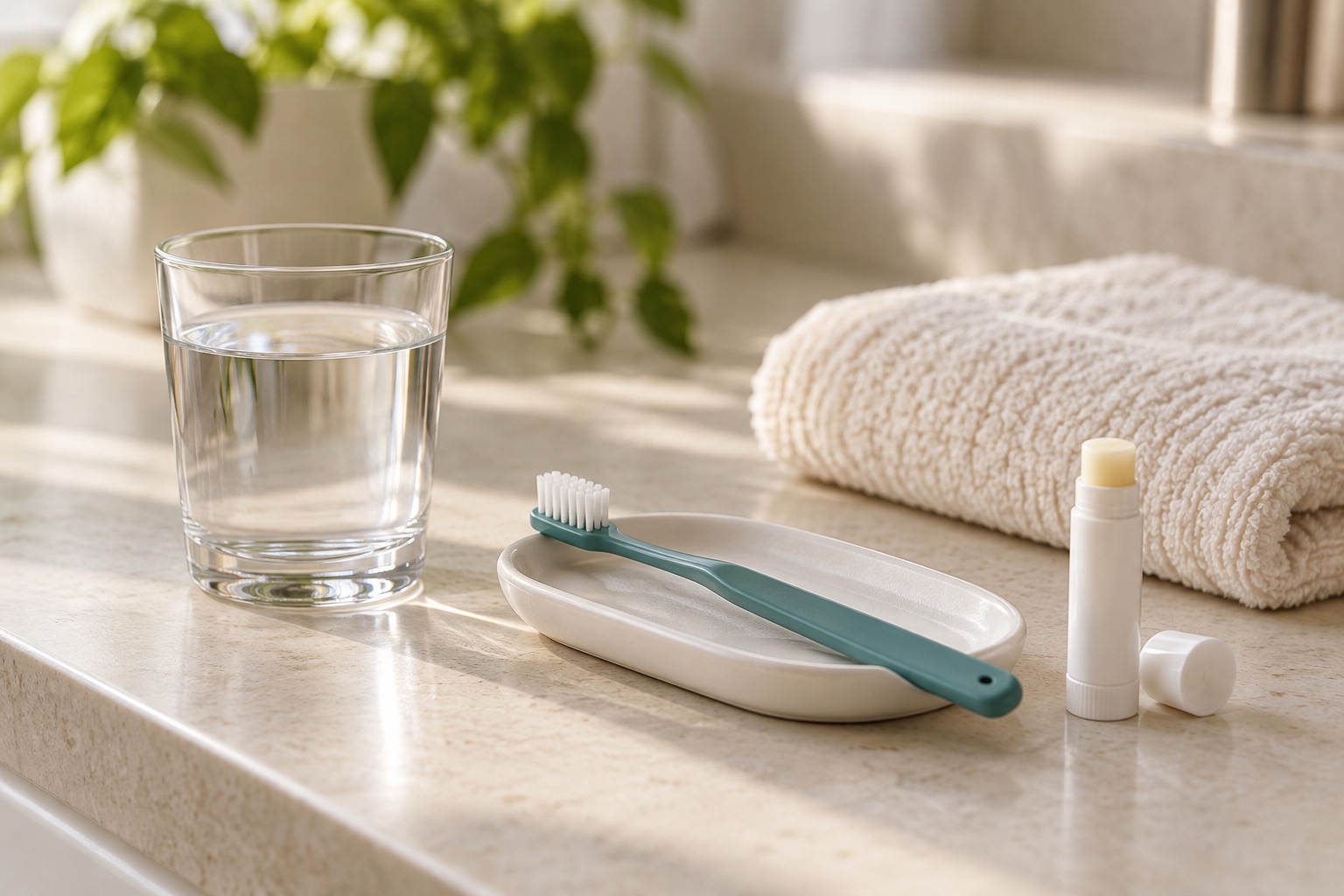
Simple daily habits can help support oral comfort.
Try regular small sips of water, sugar-free gum if comfortable to chew, and lip balm for dry lips. Brush twice daily and avoid alcohol-containing mouthwash. A pharmacist can help you choose a suitable moisturising gel or spray. Cut back on drinks and foods that irritate your mouth, including alcohol, excessive caffeine and acidic or spicy foods. NHS: Dry mouth
At mealtimes, moist foods or a little soup or sauce may be easier to manage than dry crackers. Small sips between bites may help. Follow any fluid restriction given by your doctor rather than adopting a fixed daily water target from an online article. NCCS: Dry Mouth
When should I seek help?
Arrange an assessment if dryness persists despite self-care, interferes with eating or speaking, or comes with pain, white patches or persistent changes in taste. Mention dry eyes or unusually frequent urination too. NHS: Dry mouth
If you cannot eat or drink, or cannot take essential medicines because of mouth symptoms, seek prompt medical help. Breathing difficulty requires emergency assessment. NCCS: Dry Mouth
Agree on treatment goals and follow-up
Ask which part of the plan aims to improve comfort, which protects the teeth and whether a medicine review or further investigation is needed. Tell the clinician what you have already tried. Clarify when to return and what changes should prompt earlier advice. If burning is the main concern, see our burning-mouth guide.
Preparing for an oral medicine consultation
Bring your medicine list, including over-the-counter products, and note when the dryness started. A simple record of night-time symptoms, meals that are difficult and products you have tried can help you explain the problem clearly.
Useful questions include: “What could be contributing to my dryness?”, “How should I protect my teeth?” and “Would any tests or medical review help?”
Learn about oral medicine assessments at Teeth Q, or request an oral medicine appointment. If your main concern is a persistent sore, read our guide to a mouth ulcer that is not healing.
This article provides general information and does not replace an individual assessment.