

 Book an Appointment


Most minor mouth ulcers settle within one to two weeks. If an ulcer has not healed after two weeks, arrange an assessment with a dentist or doctor. Seek advice sooner if it is worsening or you have other symptoms. HealthHub Singapore recommends medical review when an untreated ulcer has not healed within 14 days, or when symptoms have not improved after seven days of topical treatment. HealthHub: Mouth Ulcer
A persistent ulcer does not automatically mean cancer. It does mean that continuing to treat it yourself without an examination may miss the underlying cause.

Noticing a persistent mouth sore is a reason to arrange an assessment.
Is it one ulcer that will not heal, or ulcers that keep coming back?
These are different patterns, and describing yours helps your clinician assess the problem.
A persistent ulcer stays in the same place without fully healing. Recurrent ulcers heal, but new ulcers appear later. Recurrent ulcers can have several explanations, including nutritional deficiencies, medication effects and underlying medical conditions. Sometimes the cause remains unclear. SingHealth: Mouth Ulcers
Before your appointment, note when the sore first appeared, whether it ever disappeared completely, and whether each episode affects the same place. If you already have photographs showing how it changed, bring them along.
Why can mouth ulcers happen?
A bite to the cheek or tongue, irritation from braces or dentures, and injury during brushing can damage the lining of the mouth. Other possible contributors include deficiencies in iron, folate or vitamin B12, certain medicines, infections and inflammatory medical conditions. These possibilities cannot be distinguished reliably from a description alone. HealthHub: Mouth Ulcer
Some inflammatory conditions can also produce sore or ulcerated areas rather than a single typical ulcer. Oral lichen planus, for example, can cause white markings and red or ulcerated areas in the mouth. Identifying the condition matters because its management differs from that of a simple injury. SingHealth: Oral Lichen Planus
When should you get it checked?
Arrange an assessment if an ulcer has not healed at two weeks. Do not keep postponing a visit because a gel temporarily makes it less painful.
Seek earlier advice if the ulcer is becoming more painful, red or prone to bleeding, or looks different from ulcers you have had before. A dentist or doctor should also know about ulcers elsewhere on your body or painful, swollen joints. NHS: Mouth Ulcers
A persistent red or white patch, a lump in the mouth or neck, ongoing mouth pain, difficulty swallowing, or unexplained weight loss also needs assessment. These symptoms have several possible causes; an examination is needed to establish what is happening. NHS: Symptoms of Mouth Cancer
Does a non-healing ulcer mean mouth cancer?
No. Many mouth ulcers are benign. However, some cancers can present as an ulcer that does not heal, so a persistent sore should be examined rather than diagnosed from a photograph or online comparison.
SingHealth advises evaluation for ulcers that persist for two to three weeks, including in people who do not smoke, drink alcohol or chew betel nut. The two-week assessment advice in this guide follows HealthHub’s earlier review threshold. SingHealth: Mouth Ulcers
Should you see a dentist, doctor or an oral medicine clinician?
A dentist or doctor can be a starting point for a mouth ulcer. Oral medicine is particularly relevant when a problem is persistent, recurrent or associated with other medical conditions. It focuses on diagnosing and managing disorders affecting the soft tissues of the mouth, including chronic inflammatory conditions and burning mouth symptoms. National Dental Centre Singapore: Oral Medicine Unit
Persistent ulcerated areas that do not respond to topical treatment may require assessment by a dentist trained in oral medicine. Further investigation or referral depends on the findings. SingHealth: Common Oral Mucosal Lesions
What happens at an oral medicine assessment?
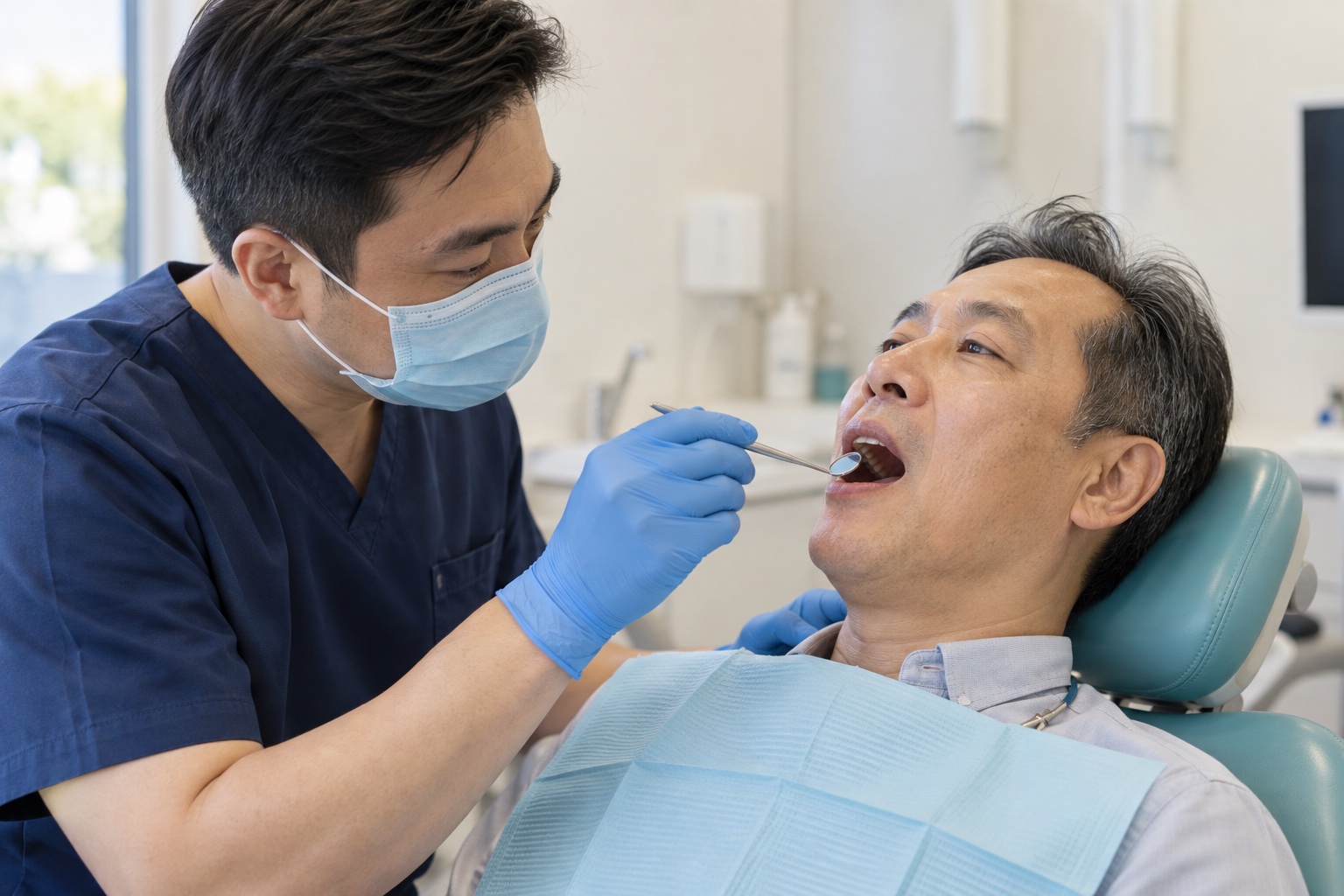
An oral examination helps your clinician assess the concern.
At Teeth Q, the assessment includes a review of your symptoms, medical history and medicines, followed by an examination of the mouth and surrounding areas. Further tests, imaging or a biopsy referral may be discussed if needed. The next steps depend on the examination; a biopsy is not presented as a routine requirement for every ulcer. Teeth Q: Oral Medicine
Useful information to prepare includes:
- When the ulcer appeared and whether it has healed between episodes.
- Medicines and supplements you take.
- Treatments you have already tried and whether they helped.
- Other symptoms or recent changes in your health.
What can you do while waiting for your appointment?
Use a soft toothbrush, choose softer foods and avoid very hot, spicy, acidic or rough foods if they irritate the area. A pharmacist can advise on suitable products for pain relief. These measures can help with discomfort, but they do not replace assessment of a persistent ulcer. NHS: Mouth Ulcers
Treatment depends on the cause. Pain-relieving preparations, selected mouthwashes or anti-inflammatory treatments may be appropriate in some cases. Ask a pharmacist, dentist or doctor which product is suitable for you. HealthHub: Mouth Ulcer
Before you leave the assessment
Ask what the clinician thinks is causing the ulcer, whether tests or referral are needed, and when it should be checked again. If a treatment is suggested, clarify how to use it and what to do if the sore remains or changes. A planned review is more useful than continuing the same product indefinitely without reassessment.
Oral medicine assessment at Teeth Q
See the oral medicine service page for clinician, clinic and appointment information.
Assessment fees depend on the complexity of the case and any investigations required. The service page does not publish a fixed dollar amount; it states that an estimate is provided before proceeding. Teeth Q: Oral Medicine
Learn about oral medicine at Teeth Q or request an oral medicine assessment.
This article provides general information and does not replace an individual clinical assessment.