

 Book an Appointment


Clinically reviewed by Dr Audrey Chua
Clinical review completed: 13 September 2026
Receding gums do not normally grow back on their own. Treatment depends on the cause and may aim to control gum disease, relieve sensitivity or protect an exposed root. Some patients may benefit from gum grafting; an examination is needed to decide what is appropriate. Cleveland Clinic: gum recession
If you have noticed a changing gumline, the useful first question is: what is causing the change, and is it progressing? A dentist can help you understand the findings before you choose treatment.
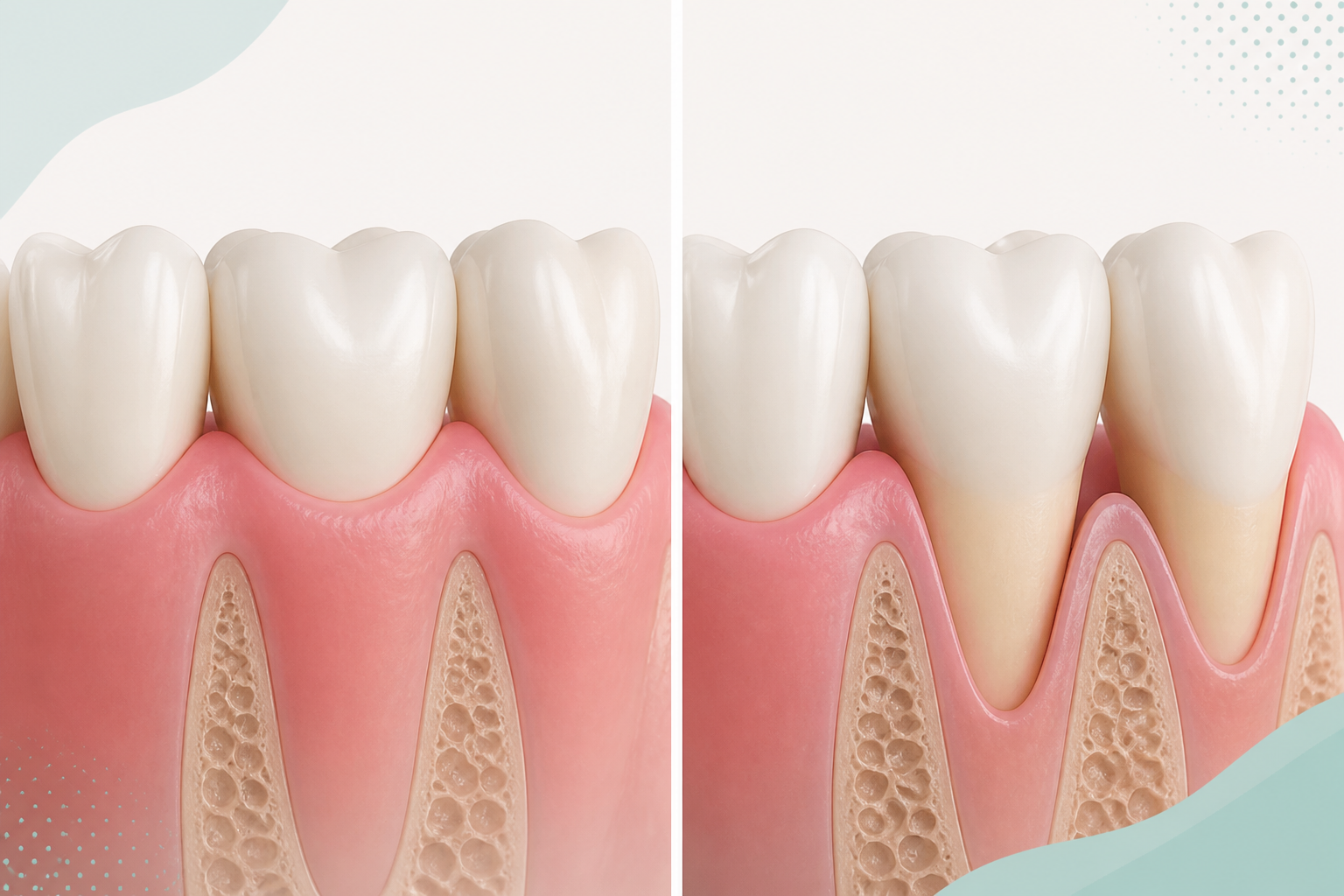
Can receding gums grow back with toothpaste or home care?
Gentler cleaning and suitable toothpaste can help with oral care or sensitivity, but they do not regrow lost gum tissue. A desensitising toothpaste may reduce discomfort from exposed roots; the dentist may also consider fluoride varnish or another desensitising treatment. Cleveland Clinic: gum recession
Surgical treatment is different from spontaneous regrowth. Gum grafting uses tissue to cover an exposed root or improve the tissue around it. Its suitability and expected benefit depend on your mouth. American Academy of Periodontology: gum graft surgery
Why do gums recede?
Gum recession can have several contributors:
- Gum disease.
- Forceful brushing.
- Naturally thin gum tissue.
- The position of a tooth within the bone.
- Local tissue attachments around a tooth.
Having recession does not automatically mean you have brushed badly. More than one factor can be involved. Cambridge University Hospitals: gum grafting
Is gum recession the same as gum disease?
No. Recession describes a change in the gumline; gum disease is one possible cause. Gum disease can also cause bleeding, swelling, persistent bad breath and loose teeth. These findings need assessment rather than a diagnosis from appearance alone. NIDCR: gum disease, Cambridge University Hospitals: causes of recession
If bleeding is your main concern, read our bleeding-gums guide.
What treatment options can help receding gums?
The aim is not identical for every patient. Ask whether the proposed treatment addresses disease, sensitivity, root exposure or more than one of these concerns.
1. Improve cleaning technique and manage sensitivity
The dentist can help you clean effectively without scrubbing the gumline. A soft toothbrush and gentle technique are important. Cambridge University Hospitals: gum care
Sensitivity treatments may make exposed roots more comfortable. In selected cases, tooth-coloured bonding can cover an exposed area. Bonding covers the tooth surface; it does not create new gum tissue. Cleveland Clinic: treatment options
2. Treat periodontal disease when it is present
Where periodontal pockets and deposits below the gumline need treatment, scaling and root planing may be considered. This cleans the root surfaces beneath the gums. Ongoing maintenance is important, and some patients need further treatment. American Academy of Periodontology: non-surgical treatment
An appointment for recession should start with assessment. Ask whether you need routine scaling and polishing or a periodontal treatment plan. Cleaning below the gumline and surgically covering an exposed root have different purposes.
3. Consider gum grafting when appropriate
A periodontist may discuss a graft to cover exposed roots, reduce sensitivity or improve the gumline. Tissue can come from the palate or another donor source. The proposed procedure should be explained for your particular case. American Academy of Periodontology: surgical procedures
Grafting involves surgery and recovery. Possible effects and risks include discomfort, swelling, bleeding, infection, an uneven gumline and a need for further surgery. Ask what improvement is realistic, what alternatives exist and how you would care for the area afterwards. Cambridge University Hospitals: benefits and risks
An assessment does not commit you to surgery. Ask the clinician whether treatment or monitoring is appropriate for the findings and your priorities.
What happens at a gum assessment?
The dentist checks the gums and teeth, measures periodontal pockets and asks about medical history and risk factors such as tobacco use or diabetes. X-rays may be needed to assess supporting bone. A referral to a periodontist may be appropriate. NIDCR: diagnosis of gum disease
Bring any earlier dental records or photographs you have, and explain when you first noticed the change. Useful questions include:
- Is this recession alone, or is gum disease also present?
- What measurements will you use to monitor it?
- What should I change about cleaning this area?
- What is each proposed treatment intended to improve?
- Would a periodontal specialist’s opinion help?
What can you do before the appointment?
Brush twice daily with fluoride toothpaste and clean between the teeth using a method recommended for your mouth. Keep up dental reviews and seek support to stop tobacco use if relevant. NIDCR: gum-health advice
Avoid hard scrubbing. Tell the dentist if sensitivity makes it difficult to clean, rather than abandoning cleaning around that tooth. Do not assume that changing toothpaste has addressed the cause of a changing gumline.
When should you see a dentist?
Arrange an assessment for a new or changing gumline or persistent sensitivity. If your gums bleed, are swollen or sore, or you have persistent bad breath, have them checked. Seek an urgent dental appointment for very painful swollen gums or teeth becoming loose. NHS: gum disease
For severe symptoms or uncertainty about urgent care, see our dental-emergency guide.
Asking about treatment costs in Singapore
Request a written estimate after assessment. Useful questions include whether the quotation covers examination, X-rays, treatment of gum disease, any proposed grafting, follow-up visits and maintenance. Ask whether fees differ according to the number of teeth or treatment sites, and whether GST is included where applicable.
These are questions to clarify an estimate, not a list of services included in every treatment. For payment information, read our CHAS and MediSave guide; eligibility must be checked for the actual procedure.
Arrange a dental assessment
Start by finding out why your gums are receding and what the treatment needs to achieve. Find a Teeth Q clinic or book a dental assessment.
General information only. This article does not replace an individual dental examination, diagnosis or treatment plan.