

 Book an Appointment


Tooth sensitivity is a short, sharp pain triggered by cold, heat, sweet or acidic food, or touch, caused by exposed dentine – the layer beneath enamel and gum. It is usually the result of gum recession or enamel wear, and most cases improve with a desensitising fluoride toothpaste, gentler brushing and, where needed, a fluoride varnish or small filling applied by a dentist. Pain that lingers, affects one tooth or hurts on biting points to decay, a crack or an inflamed nerve and should be examined.
Key facts about sensitive teeth
- Sensitivity (dentine hypersensitivity) is pain that is sharp and brief – it fades within seconds of removing the trigger.
- The two commonest causes are gum recession, which exposes the root, and enamel wear from acid, hard brushing or grinding.
- A sensitivity toothpaste needs at least four weeks of twice-daily use before judging whether it works.
- Sensitivity confined to one tooth, or pain on biting, is more likely decay or a crack than general sensitivity.
- Dentists treat it with fluoride varnish or desensitising agents, bonding over worn areas, gum treatment or a night guard – matched to the cause found at the examination.
What causes tooth sensitivity?
Enamel covers the crown of a tooth and cementum covers the root. Underneath both is dentine, which contains thousands of microscopic tubules running towards the nerve. When enamel thins or the gum pulls back and uncovers the root, cold, sweet, acidic or touch stimuli move fluid in those tubules and the nerve registers a quick, sharp pain. Common reasons the dentine becomes exposed:
- Gum recession. Roots have no enamel. Gum disease, firm brushing and age all cause gums to recede and expose root surfaces. See our guide to receding gums.
- Enamel wear. Acidic drinks, frequent sour or fizzy snacks, acid reflux and scrubbing with a hard-bristled brush thin enamel over years.
- Teeth grinding (bruxism). Night grinding wears enamel flat and can create small notches near the gum line. See jaw pain and teeth grinding.
- Recent dental work. Fillings, crowns and professional cleaning can leave teeth sensitive for one to two weeks while they settle.
- Whitening. Peroxide-based whitening commonly causes temporary sensitivity; dentist-supervised whitening is planned around it.
- Decay, cracks or a leaking filling. These need treatment rather than toothpaste.
How can I reduce tooth sensitivity at home?
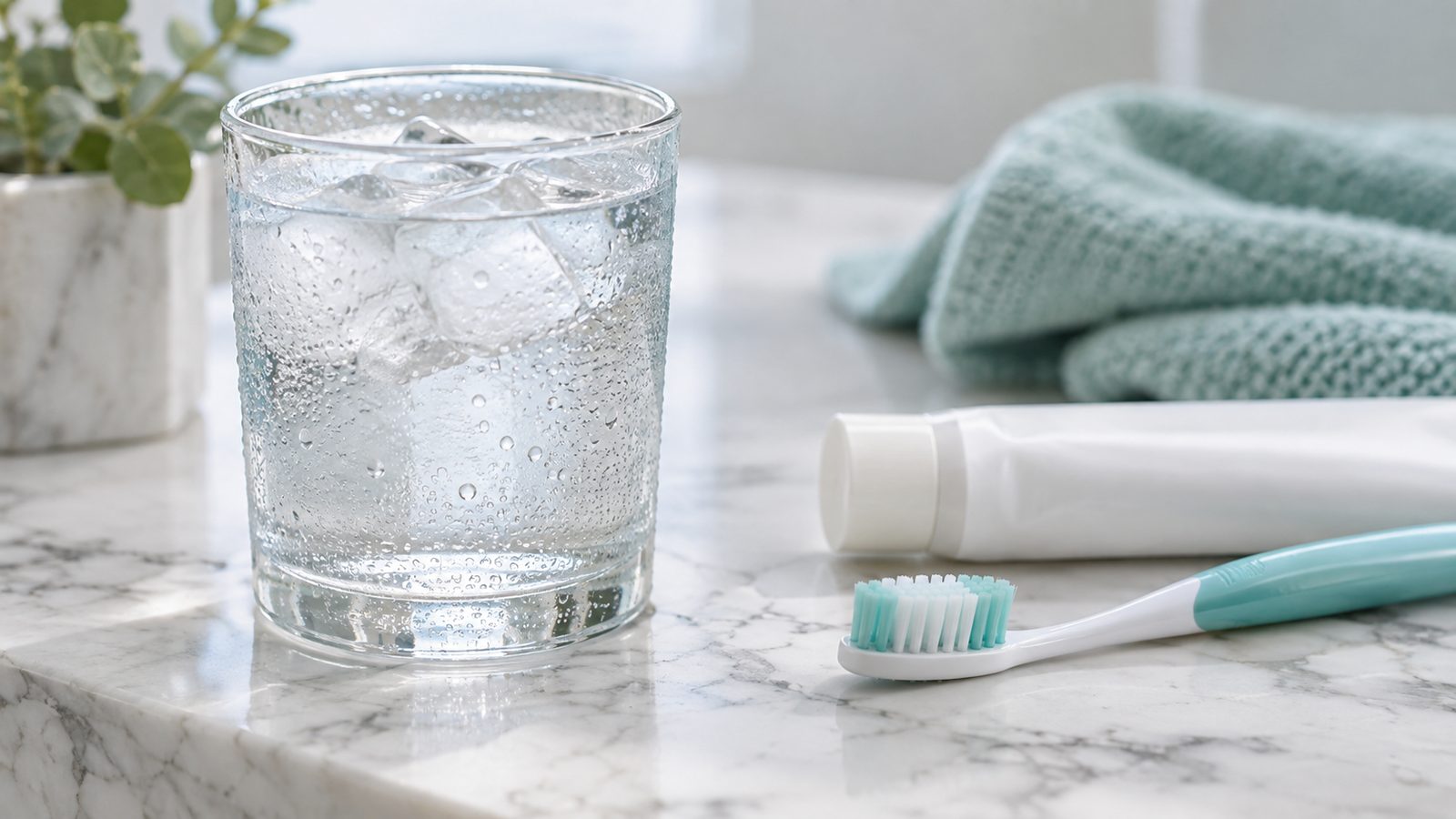
A soft brush and a sensitivity toothpaste, used consistently, are the first step for most people.
- Use a soft-bristled brush with a gentle circular motion. Pressure, not effort, wears teeth and gums.
- Brush twice daily with a fluoride toothpaste made for sensitive teeth (typically containing potassium nitrate or stannous fluoride) for at least four weeks. Spit, do not rinse, so the fluoride stays on the teeth.
- Wait 30 to 60 minutes before brushing after acidic food or drink; enamel is softer immediately afterwards.
- Have acidic drinks with a meal rather than sipping them over hours.
- If you wake with a tight jaw or a partner hears grinding, mention it at your next visit.
When should sensitive teeth be seen by a dentist?
Book an assessment if sensitivity:
- lasts more than a few weeks despite a sensitivity toothpaste;
- is getting worse or affects one tooth in particular;
- comes with pain on biting, a visible chip or crack, or a hole you can feel with your tongue;
- lingers for more than a few seconds after the trigger is removed;
- started after a filling or crown and has not settled in two to three weeks.
Severe pain, facial swelling or fever are not sensitivity – see our guide to dental emergencies in Singapore or contact a clinic directly.
How do dentists treat sensitive teeth?
The visit starts with finding the cause: checking gum levels, looking for wear, cracks and decay, and taking an X-ray where needed. Treatment then matches the finding.
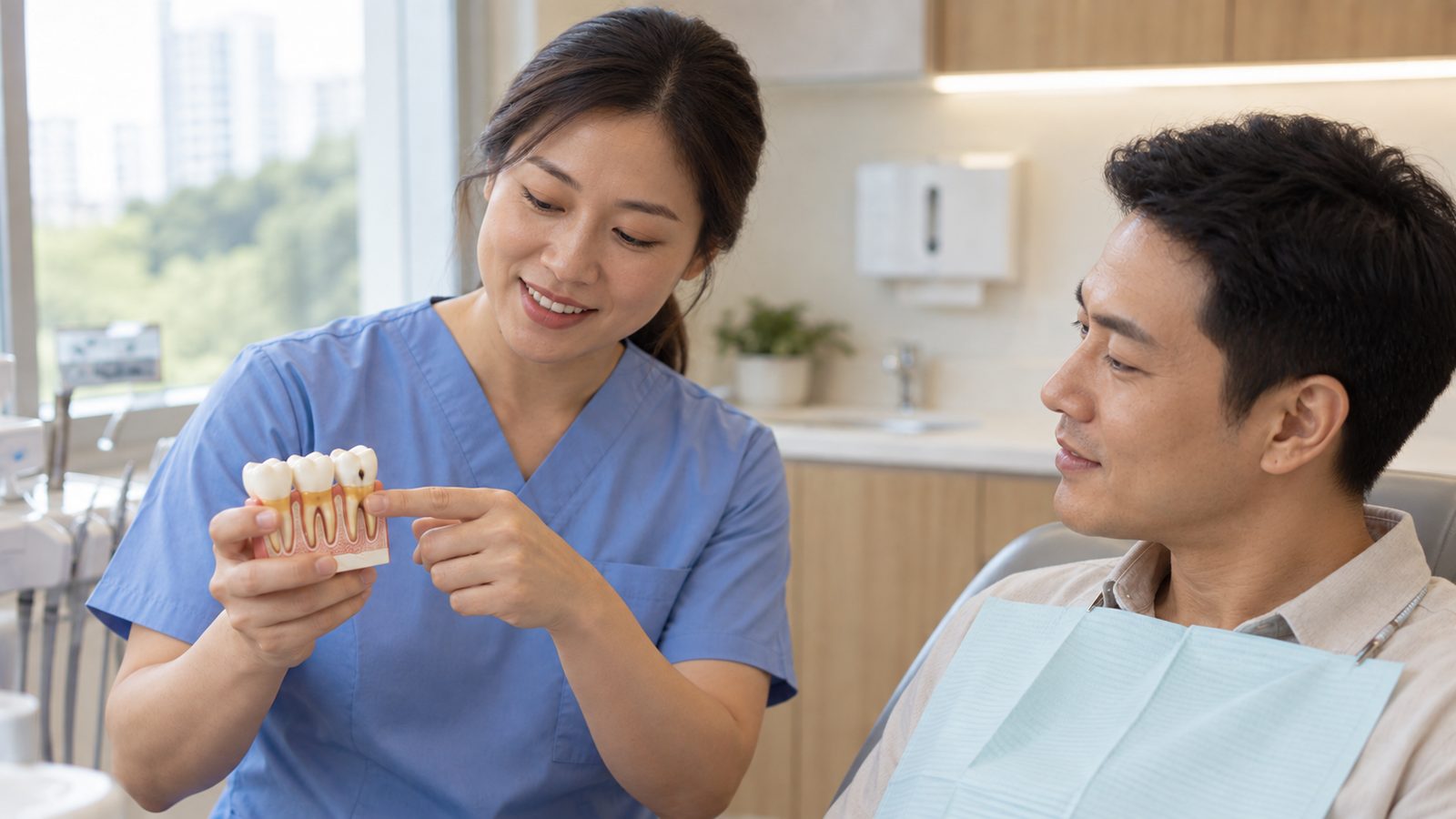
Your dentist will show you where dentine is exposed and which treatment fits. Illustrative image; people shown are AI-generated.
- Fluoride varnish or desensitising agents applied to exposed areas to seal the tubules. Quick and painless; sometimes repeated over a few visits.
- Bonding – a thin tooth-coloured filling over worn notches at the gum line.
- A night guard when grinding is the driver.
- Gum treatment when recession is linked to gum disease.
- A filling, crown or root canal treatment if the real problem is decay, a crack or an inflamed nerve.
Most patients with generalised sensitivity improve with fluoride treatment plus home care. The dentist will tell you which category you fall into after the examination.
Sensitivity in children and older adults
Newly erupted permanent teeth in children can be sensitive for a while and usually settle. In older adults, sensitivity more often comes from gum recession and root exposure; exposed roots are also more prone to decay, which is a second reason to have them checked rather than managed with toothpaste alone.
Frequently asked questions
Does tooth sensitivity mean I have a cavity?
Not necessarily. Sensitivity to cold across several teeth is usually exposed dentine. Sensitivity in one tooth, or to sweet foods, is more often decay or a crack and is worth checking.
Can sensitive teeth be fixed permanently?
Exposed dentine can be sealed or covered and the trigger – grinding, brushing technique or acid – addressed, which resolves it for many people. Where gums have receded, the goal is to protect the root surface and stop further recession.
Is it safe to whiten sensitive teeth?
Often yes. A dentist adjusts the concentration and timing and may apply a desensitising gel before and after, which is one reason dentist-supervised whitening is preferred over over-the-counter kits.
Which toothpaste is recommended for sensitive teeth?
Any fluoride toothpaste labelled for sensitivity that contains potassium nitrate or stannous fluoride. Use it as your regular toothpaste twice daily for at least four weeks, and spit rather than rinse.
Are check-ups for sensitive teeth covered by CHAS or MediSave in Singapore?
CHAS subsidises eligible consultations and selected treatments for cardholders at our clinics; MediSave covers specific surgical procedures only. See CHAS and MediSave for dental treatment, or ask the front desk before your visit.
Getting sensitive teeth assessed at Teeth Q
Teeth Q Dental Surgeons has clinics at Hougang Green, Matilda Portico (Punggol), Fernvale Woods (Sengkang), Hougang Rivercourt (Kovan), Dakota Breeze and Tampines GreenGem. You can book a consultation online at the clinic closest to you, or message the clinic team if you are unsure which option fits.
This article is general information and does not replace an examination by a dentist.